Why Your Quoted Processing Rate Isn't Always What You Actually Pay
The rate on the sales sheet and the rate you really pay can be far apart. Here's where the gap comes from, piece by piece.

Imagine an owner quoted "1.69%." They later divide total fees by card sales and get a figure closer to 3%. This is an illustrative scenario, not a customer result. The difference could come from pricing tiers, per-transaction charges, or fixed fees that the headline rate didn't include.
To see where the gap comes from, it helps to know what actually happens when a customer taps a card.
Where your money goes on every card sale
Each card payment is split between three groups:
- The bank that issued the card gets interchange. This is usually the biggest piece. It's set through the card networks and changes based on the type of card and how it was taken.
- The card network (Visa, Mastercard, Discover, American Express) gets an assessment. It's a small percentage.
- Your processor gets its markup. This is the only piece the processor controls.
On top of those per-sale costs, your processor may charge monthly or yearly fees that have nothing to do with any single sale.
The pricing plan changes what "rate" means
The same quoted number means very different things depending on which kind of plan you're on.
| Plan type | How it works | What the quoted rate covers |
|---|---|---|
| Flat rate | One percentage (and sometimes a few cents) on every sale | Usually most of your per-sale cost, but monthly extras can still apply |
| Tiered | Sales get sorted into qualified, mid-qualified, and non-qualified buckets | Often only the cheapest bucket |
| Interchange-plus (cost-plus) | You pay the actual interchange and assessments, plus a fixed markup | Only the processor's markup, shown separately |
Notice the trick with tiered plans. If the 1.69% only applies to "qualified" sales, and most of your customers use rewards cards that count as "non-qualified," then most of your sales are charged at a higher rate. The quoted number was technically true and practically misleading.
The per-sale fee you forgot about
Many plans add a fixed amount on top of the percentage, like 10 or 25 cents per sale. If your average sale is large, you barely notice. If you sell a lot of small tickets, like coffee or quick-service food, those cents can add up to a big share of your cost.
| Illustrative average sale | $0.10 per-sale fee | $0.25 per-sale fee |
|---|---|---|
| $10 | 1.00% of the sale | 2.50% of the sale |
| $100 | 0.10% of the sale | 0.25% of the sale |
A lower percentage can still cost more
Illustrative comparison: same month, different quotes
The monthly fees that don't show up in the rate
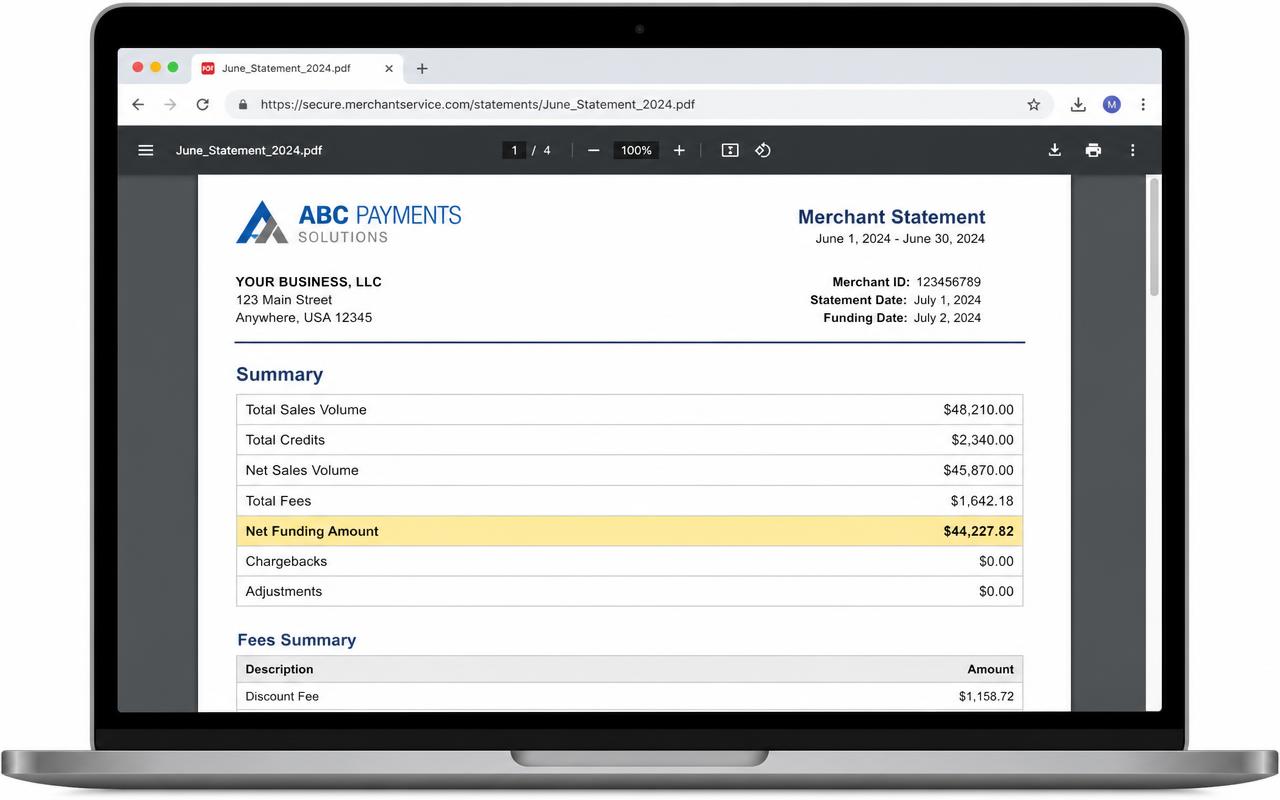
Service fees, statement fees, PCI fees, gateway fees, and terminal leases are not part of any percentage you're quoted. But they're part of what you pay. 5 Fees to Look for on Your Statement covers the common ones.
How to see your real number
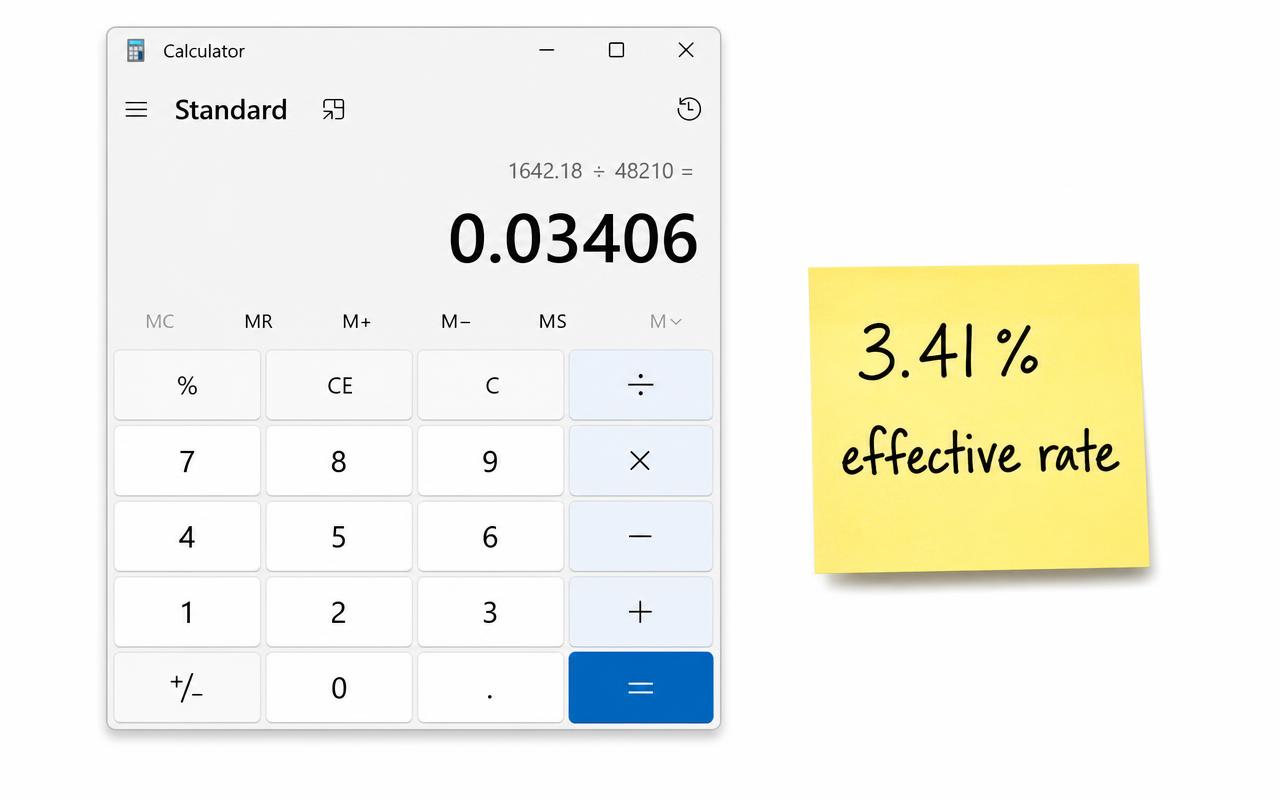
This is why the effective rate matters. It skips past the plan details and asks one question: of all the money you took in on cards, what share went to fees?
Total fees ÷ total card sales × 100. That's your real rate, no matter what plan you're on.
You can do it by hand with this step-by-step guide or use the Effective Rate Calculator.
What to ask your processor
- What kind of pricing plan am I on?
- What is your markup, separate from interchange and assessments?
- Which of my sales are being charged at a higher tier, and why?
- What monthly and yearly fees am I paying in total?
If you get clear answers, great. If you get vague ones, that tells you something too.
Ask what could change after you sign
Find out whether the quoted markup is promotional, whether online or keyed payments have different pricing, and how rate changes are communicated. On interchange-plus, "0.20%" may describe only markup; it is not comparable to an all-in flat rate. Request a calculation using the same statement, transaction count, and services for every quote.