5 Fees to Look for on Your Merchant Processing Statement
Some fees are part of the cost of taking cards. Others were added by your processor and may be negotiable. Here's how to tell them apart.
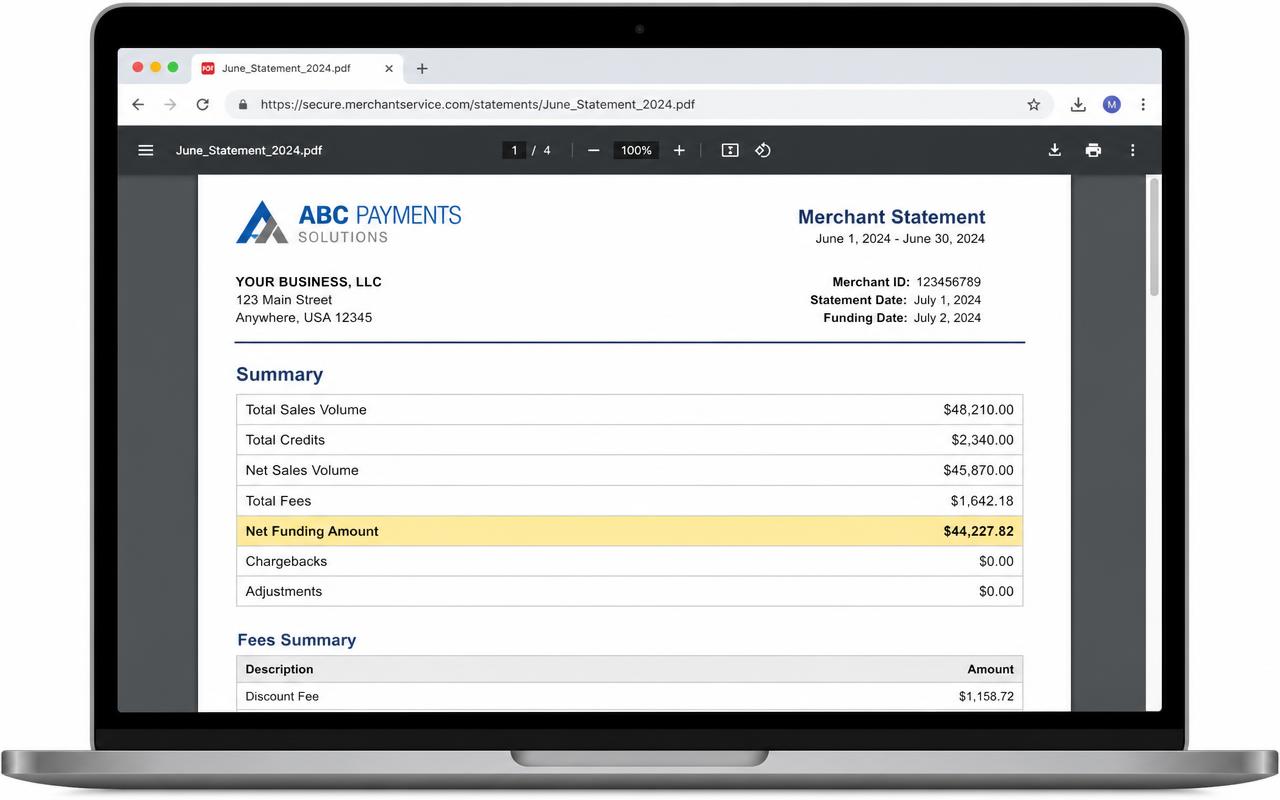
Every merchant statement has two kinds of charges mixed together. It helps to know which is which before you pick up the phone.
The first kind is the cost of the card itself. When a customer pays with a card, the bank that issued it gets a fee, called interchange. The card network, like Visa or Mastercard, gets a smaller fee, called an assessment. Your processor doesn't set these, and they can't negotiate them away for you.
The second kind is your processor's charges. This is their markup and any extra fees they add. This part is set by the processor, which means it is the part that can change.
Here are five fees from that second group that are worth a close look.
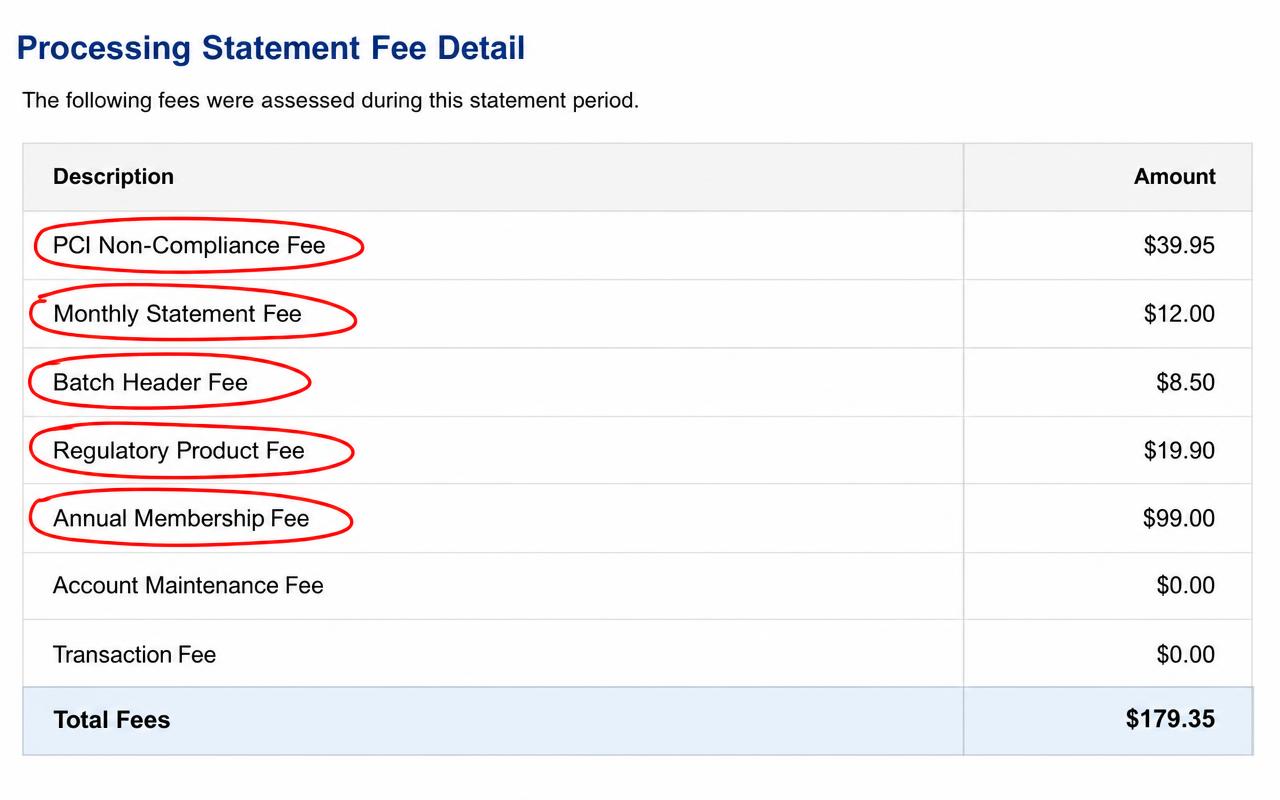
1. PCI non-compliance fee
What it is: A charge some processors apply when required PCI compliance validation is incomplete. The outstanding requirement may be a questionnaire, a scan, or another item specific to your payment setup.
Why it matters: Ask what is missing and how your processor verifies completion. Confirm in writing when the fee will stop after your status is accepted. A separate "PCI program" fee may pay for a service and may continue even when you're compliant; ask what it covers.
2. Monthly service or account fee
What it is: A flat recurring account charge. Labels may include service, account, or maintenance fee. A monthly minimum is different: it can be a shortfall charge rather than a fixed account fee.
Why it matters: Some processors charge one. Some charge three with different names. Add them all up and ask what each one pays for.
3. Monthly minimum fee
What it is: A charge that kicks in if your fees for the month fall below a set amount.
Why it matters: Ask which charges count toward the minimum. It may apply to processor markup rather than all fees. Sales volume alone doesn't tell you whether you meet it, especially in a seasonal business.
4. Equipment lease
What it is: A monthly payment for your card terminal. It may appear on the statement or come straight out of your bank account from a separate leasing company.
Why it matters: Leases can be long and hard to cancel. Over the full term they often cost much more than buying a terminal. Find your lease paperwork, check the end date, and compare the total cost against buying.
5. Early termination fee
What it is: A fee in your contract for leaving before the term is up. You won't see it on your statement until you try to cancel.
Why it matters: This is the fee that keeps people stuck. Some are a flat amount. Others are calculated from the fees you would have paid for the rest of the contract. Find out which kind you have before you make any decision.
A quick guide: which fees are which
| Fee | Who sets it | Can it change? |
|---|---|---|
| Interchange | The card-issuing bank, via the card network | Not by your processor |
| Network assessments | Visa, Mastercard, etc. | Not by your processor |
| Processor markup | Your processor | Often negotiable |
| Monthly service fees | Your processor | Often negotiable |
| PCI non-compliance fee | Your processor | Usually removable |
| Equipment lease | Leasing company | Depends on the contract |
You can't do much about interchange. You can often do something about everything your processor adds on top of it.
What to do with this list
Check the calculation, not just the label
Illustrative example: a monthly minimum
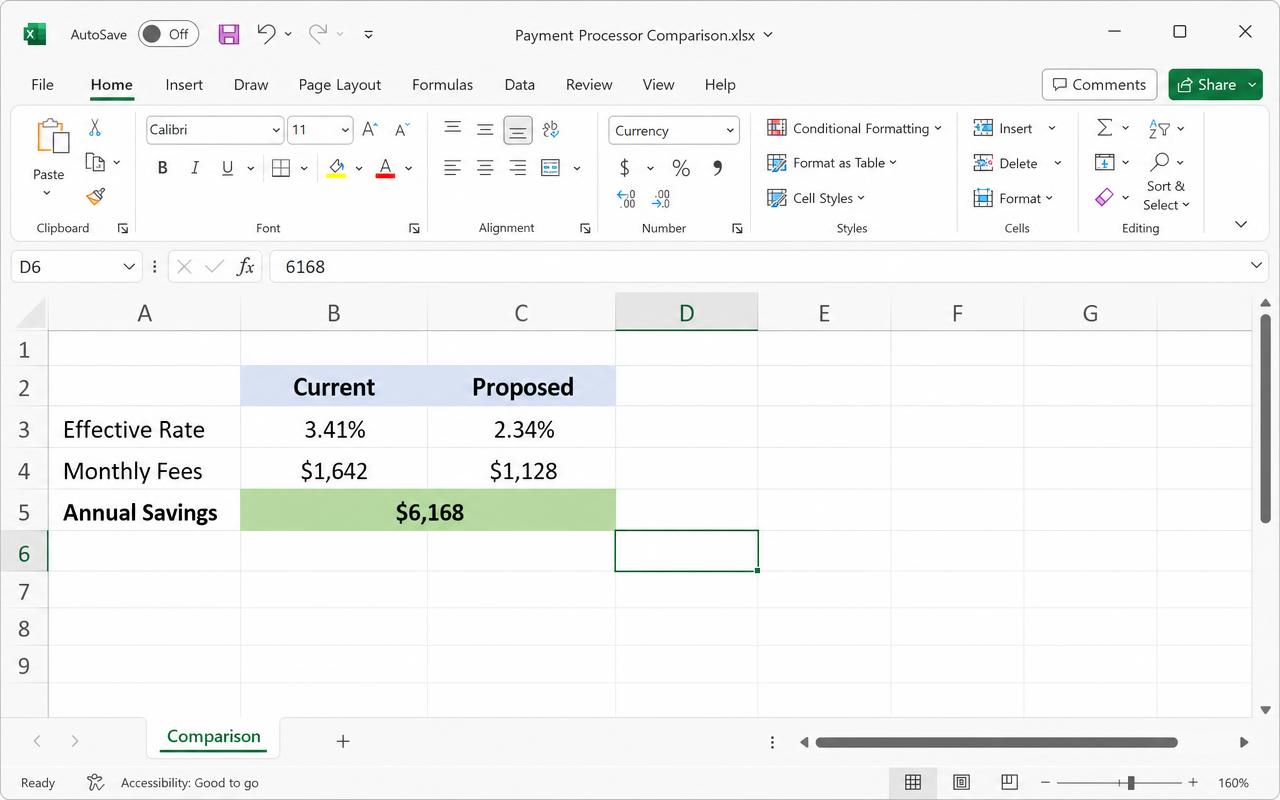
Annualize recurring fees before deciding which call to make first. A $10 statement fee is $120 over 12 months; a $40 recurring charge is $480. Those figures measure the cost, not guaranteed savings. A legitimate service or a binding lease may still be worth paying for.
Use this script when you call
"I'm reviewing the charge labeled [fee name] for [amount] on my [month] statement. What service does it cover? Where is it in my agreement? Is it recurring? What would need to change for it to stop? Please email the explanation and any agreed change, including the effective date."
Keep the reply with your statement and check the next bill. If a fee was waived only temporarily, note the expiry date. If you dispute a charge, use the notice and dispute procedure in your agreement rather than assuming that withholding payment cancels the obligation.
Take your last statement and a highlighter. Mark every fee that came from your processor rather than the card networks. Then call and ask about each one: what it is, why you pay it, and whether it can be lowered or removed.
If you're not sure which section of your statement is which, start with How to Read a Merchant Statement. And if you get answers you don't like, Should You Negotiate or Switch? covers what comes next.
Further reading
The the PCI Security Standards Council's Guide to Safe Payments explains small-business payment security. PCI requirements and your processor's fee policies are separate: use the guide for security context and your agreement for billing terms.