How Often Should You Review Your Credit Card Processing Costs?
Processing costs drift when nobody's watching. A short yearly review, plus a quick monthly glance, is usually enough to catch it.

Most owners look closely at their processing costs exactly once: the day they sign up. After that, the statements arrive, the deposits land, and life goes on.
The trouble is that processing costs don't stay put. Card networks update their rates. Processors add or raise fees, often with notice printed on a statement. Promotional pricing ends. Contracts renew. None of it is dramatic, but over a few years it can add up.
The short answer
- Every month: a two-minute glance at total fees
- Once a year: a proper review with the checklist below
- Any time something changes: a big jump in sales, a new way of taking payments, or a notice from your processor
The monthly glance
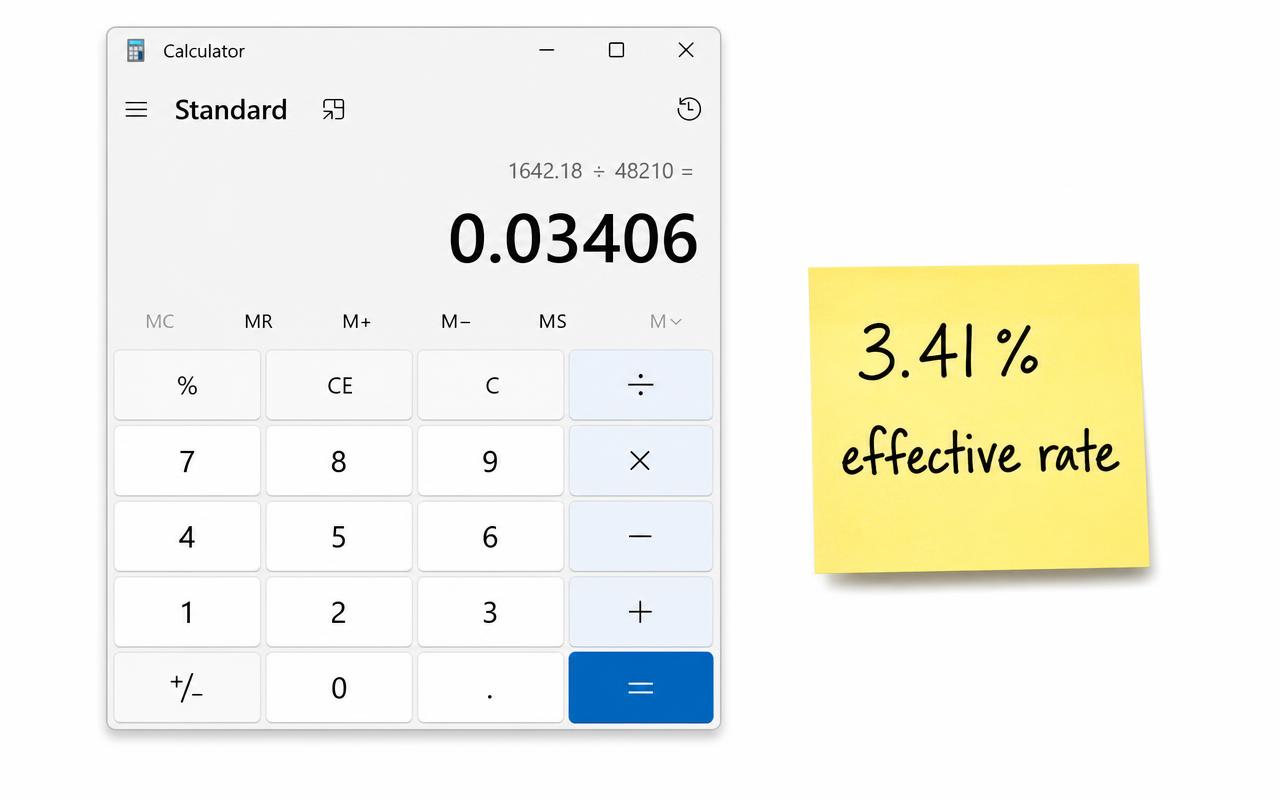
When your statement arrives, find two numbers: total card sales and total fees. Divide fees by sales. Write the result in a notebook or spreadsheet.
That's it. You're not trying to analyze anything. You're building a record. If the number jumps one month with no obvious reason, you'll notice. If you want help with the math, the Effective Rate Calculator does it for you.
The yearly review checklist
Pick a month you'll remember, like the start of your fiscal year. Pull the latest statement and the same month from last year. Then work through this list:
- Compare effective rates. Is this year's higher than last year's on similar sales?
- List every fee. Are there any new ones? Did any existing ones go up?
- Check for a PCI non-compliance fee. Ask which validation requirements are outstanding and confirm when the charge stops after acceptance.
- Look at your pricing plan. Do you know what plan you're on and what your markup is?
- Check your equipment costs. Are you still leasing? When does the lease end?
- Read your contract dates. When does it end? Does it renew automatically? Is there a cancellation window?
- Think about your service. Have deposits been on time? Was support helpful when you needed it?
- Note what changed in your business. More online sales, a new location, or bigger average tickets can all change what plan fits best.
Write down what you find each year. Next year's review takes half the time when you can see last year's notes.
When to look sooner
Keep a record that explains the number
| Record each month | Why it helps |
|---|---|
| Card sales, fees, and effective rate | Shows the trend using a consistent calculation. |
| Transaction count and average ticket | Helps explain changes in per-transaction costs. |
| Online versus in-person sales | Separates a payment-channel change from a pricing change. |
| Annual or one-time fees | Explains a spike that may not repeat next month. |
| Rate notices and contract deadlines | Leaves time to act before a change or renewal. |
For example, if your rate rises in the month an annual fee is charged, keep the actual month's total and also note the one-time item. Don't silently delete it. For an annual cost comparison, count it once across the full year so it doesn't disappear or get multiplied by 12.
Give every finding an owner and a follow-up date
A review only helps if someone closes the loop. Next to an unexplained fee, write who will call, what answer is needed, and which statement should show the correction. For contract renewals, use the notice deadline in the agreement—not just the contract's end date—and keep evidence of any cancellation notice.
If a proposed change lowers monthly costs, check at least the first statement after it takes effect. Confirm the agreed markup, recurring fees, and any new term. A verbal promise is not a substitute for an updated bill.
Don't wait a full year if:
- Your fees jump and your sales didn't
- You get a notice about pricing changes
- You start taking payments a new way, like online or over the phone
- Your sales grow a lot, since higher volume may qualify you for better pricing
If you'd like a second set of eyes on any of this, here's what a free processing audit looks like.